Tag Archives: writing

Oh, the dreaded Back Cover Text!

One of the benefits of indie publishing (yes, there are benefits!) is having total control over the entire process, and the appearance of your finished product.

Of course, this leads us to one of the drawbacks as well.  Major publishing houses have copywriters who do back cover copy, and do it very well.  Most authors are not well-prepared to write their own copy, and many are too close to the work to do it well.  As an indie-published author, back cover copy is also something you have total control over.

Can I just say it?  That can sort of stink.  I’ve pulled my hair out a time or two over back cover text, and never been really happy with any of it.  In fact I became so completely unhappy with Concerto’s back cover copy that I recently decided to rewrite it.

Of course, the book is out there.  I’m done with it, and unless I decide it’s worth pulling it off the market for a few days to update the cover (Edited to add: which I did :), the original back cover text will remain.

But in attempting to rewrite it, I had to take a step back and think about what back cover copy really does, and how it should be written.  We’re writers.  There’s no reason we can’t write decent back cover copy, along with stories and books and everything else we write.  We just need to know what the rules are, because it’s very different from writing a novel.

I’d like to share with you what I learned.  You can use my results to decide whether my method is worth bothering with for yourself.

So to start, my original back cover text, with my apologies:

What if…
…you could work with the greatest violinist
in history?
…the greatest violinist in history was also
the chief suspect in his wife’s murder?
…a violent stalker terrorized you just outside
the reach of the law?

What if…
…the only person who could stop the stalker
…solve the murder
…and save your life…

…was you?

Join Chrispen Marnett on the journey of a lifetime as she unravels the layers of the past…
…love…
…lies…
…music…
…murder…
…to discover the truth about the Newton Philharmonic Symphony Orchestra and its international celebrity concertmaster, Alexis Brooks.

Okay, so there are some problems here.  Even I could see that, though I wasn’t immediately clear how to fix it.  It seems to be composed simply to take up a lot of space on the page, but its problems go deeper than that.  I think one of the reviews on Goodreads says it best:

…the synopsis on the back cover did not promise much…

Is she right, or is she right?

So I took a step back.  When you look at a book, probably the first thing you look at is the cover.  I like my cover, so we’re good there.  What’s the next thing you do?  If you’re like most people, you flip it over and check out the back cover text.  What are you looking for there?

This is an important question, though it seems obvious.  Missing this question is why my back cover copy was such a mess.  I had no grasp at all on why a person reads back cover text in the first place.

Back cover text needs to convey five basic things to be successful.

  • Who
  • Why
  • Where
  • What
  • How

I love these questions.  If you read my recent posts on Ideas, then you’ve seen my fascination with them.  They work here too.

Who–you must introduce your main character, and at least reference your villain.  You may also reference other supporting characters, like love interest or sidekick, depending on how strong a part they play in the story.  My main character is mentioned only in the last paragraph.  I suppose we assume the violent stalker is the enemy.  And there is a famous violinist in there somewhere…nothing is very clear about any of these characters, though.

Why–this is your primary conflict that drives your story.  Why is this story happening?  I suppose I would assume the primary conflict in the copy above is our protagonist vs the violent stalker.  Hard to be sure, though, since it’s somewhat hard to tell who the protagonist actually is.

Where–your setting.  Give a nod to where all this is happening, it makes a difference to your reader.  How much emphasis you want to give this really depends on the book you’ve got.  Setting can play a pretty major role in some genres.  If Concerto had been a fantasy or sci-fi novel, the setting would have required more explanation.  But in this blurb above–I feel like the setting is absent entirely.

What–it’s hard to explain, but this should reference your genre.  It’s the “what” happens to make it a romance, or a western, or a whatever.  This is where you put some spin on the ball, to angle it to your target readers.  I don’t know that there is anything in the cover text above that would angle this very strongly to suspense readers, or any other kind of reader, really.

How–this is your hook.  It’s how you are going to hold your reader’s attention–if you can’t hold them to the end of your blurb, you will never keep them all the way through your book.  Cite the danger, risk, or threat that raises the stakes and keeps the pressure on.

Keeping these things in mind, I took another stab at writing back cover copy for Concerto. I know I’m biased, but I think this is a more effective blurb:

“I see you.”

Three simple words from her telephone in the dead of night send violinist Chrispen Marnett’s life spiraling in directions she never imagined.  The chance to work with the greatest violinist alive drew her to Newton, but nothing could have prepared her for what she found there.  Terror lurks in unexpected places–a ringing phone, a late-night rehearsal, unexpected flowers.

And what could have prepared her for Alexis Brooks: symphony concertmaster, international superstar, and accused murderer?  Withdrawn and moody, Alexis is cut off from everyone around him; his colleagues in the symphony, his fans, even his own father.  Everyone from her mother to the Newton Police has warned Chrispen against Alexis, but as her own danger increases, he may be her only ally.

Join Chrispen on the journey of a lifetime as she fights for her sanity, her happiness, and her life.  To survive, she must unravel the layers of the past and learn the secrets the Newton Philharmonic Symphony Orchestra hides.

Sparks

Last time we talked about ideas, and how we might work a spark into an idea, into a story.
Today, let’s talk some more about sparks.

The spark, if you recall, is what we called that tiny seed, too small to even call an idea.  But with some care we can sprout it into an idea that we can work into a story.  In our last discussion, the spark was a single image.  Asking questions about that image helped to develop our story idea.

But what we didn’t discuss was where that spark came from.  You’ve got to have something to start with, no matter how small.

Sparks can come from anywhere.  In the last post I wanted an example, something intriguing, that would be good to further the discussion.  So I thought about it for a few minutes and that’s what I came up with.  Sometimes that will happen.

But if it doesn’t, it’s important to remember that the world around you is rife with sparks.  You may find sparks in things other people assign no importance to.  The crucial thing is to be prepared to catch them.  To push our analogy, any spark will fizzle and die if it isn’t caught and nurtured into a flame.

How do you catch them?  Here you have lots of options.  I always have a small memo-size notebook in my purse, and it’s handy to grab and jot notes in while I’m out.  You can also keep one on your nightstand in case you find something in a dream that feels like story fodder.

Most cellular phones these days have features that can be used for this.  You can use an application to write yourself a quick note, or send yourself an email with your thoughts.

Some people prefer to speak their thoughts.  I’ve known people who carried microcassette recorders, or their newer flash-memory-based equivalents, to catch these types of ideas.  You could even call your home phone and leave yourself a message!

The important thing is to make yourself a note of what caught your attention, and come back to it later when you’re ready to ask questions.  A particular bit of overheard dialog, a peculiar piece of action seen from afar–any number of ordinary things can spark an idea.  All you have to do is make sure you are prepared to catch them when they fly.

Ideas–A Practical Exercise

Lawrence Block once commented in one of his articles on writing–and I’m paraphrasing here–that the question, “Where do you get your ideas?” is misleading; it implies the writer is struck by an idea for a story, and from there everything is golden.

He’s right–the process of writing is an endless generation of ideas, one after the other.  Character development, plotting, backstory–all of them are nothing but the writer asking themselves questions and then dreaming up the answers, one after another, until the story is finished.

So, here you are, and you want to write a story.  But you’re sitting there with a blank page and nothing particular coming to mind to put on it.  Now what?

If you’re like most writers, you have a glimmer of an idea.  Maybe not a full-fledged story–not yet–but maybe a character, or a compelling conflict, or a bit of engaging business you want to use, or just a general thought of “I’d like to tell a story about this.”

First, we need to abandon the notion that the blank page–or empty Word document–in front of us at this moment is our story.  We’re going to do some work on this idea first.  This is the part of the writing process that to me is most like magic–starting with nothing and stringing stuff out of your head onto the page until you have a solid story.

Next, we need to abandon the notion that there are any “wrong” or “bad” answers.  As you work up ideas, you’ll be making up answers to your own questions.  Some answers you’ll like better than others.  Some answers will make you want to keep looking for a different answer 🙂  That is fine.  This is your story, the only one who decides what the right answers are is you.  The right answer is the one that leads to a story that you want to tell.

Let’s say I have in mind a particular image.  It’s not a whole story, but it’s compelling and I would like to turn it into a story.  I am imagining a woman, standing in front of her dresser, pointing a revolver at her reflection in the mirror.

This is my spark; the thing that’s making me want to write.  Your spark could be anything.  The process is always the same.  At the top of this blank sheet of paper, I am going to write out my spark.

Spark: a woman, standing in front of her dresser, pointing a revolver at her reflection in the mirror.

There are lots of questions I could ask here to start fleshing this idea out.  The old saws we learned in journalism class serve well:  Who?  What?  Where?  When?  How?

But the King of all questions is Why?  If you only get to ask one question, make it Why.  Why? is the question that will get you to the heart of things faster than any other.  I could ask Who and do a detailed character sketch of the woman with the revolver.  I could ask Where and go into great detail about the bedroom she’s in, or What and discuss the revolver.

But the first question I’m going to ask is Why?

Question: why is she pointing a gun at her own reflection?

This is where I start just making things up.  You’ve got to turn off your internal critic, the one who’ll happily inform you that all of your ideas stink.  Frankly, you aren’t looking for your internal critic’s opinion here.

You are looking for your own.  You are going to start making up answers, throwing them out there.  How will you know you have a good one?  You’ll feel it.  You’ll get shivers, or goosebumps, or you’ll just stare at your writing on the page and say “Wow.”

Answers: People usually point guns at things because they are afraid of them.  Or they want to eat them.

Is she afraid of her own reflection?  Maybe.  Maybe she is insane, and we’re demonstrating it here, with a gun in the dressing room mirror.

Or maybe her reflection really is dangerous.

That–that right there.  That is when I felt like I was onto something–something interesting, something scary–something I would want to write.  I’m on the right track there.

Given the same question, the answer that you react to may be different.  That’s fine–your story should be yours.

So I’ve got my first answer that I really like.  All of that other stuff above it is just harmless chatter.  When I’m done here, I can copy out the useful bits onto a clean sheet of paper so that all I have left is the good stuff.

What do I do now?

Of course!  I ask:

Question: Why is her reflection dangerous?

And I start making up answers until one clicks with me.  And then I look at that answer, and see what questions it prompts.  And at some point farther on down the page, I’m going to feel like I have enough material to start writing, so I will.  When I reach a point in the narrative where I feel like I need to know more to continue, I will come back to this paper and ask some more questions.

It’s perfectly possible to carry this idea out to something a story could be written from.  I may do that, if it would be helpful.  But if you’re struggling with ideas and are interested in the process, it would probably be even more helpful to give it a go yourself.

I’d love to see what you come up with.  I’m sure it will be awesome.

Heroes & Heroines

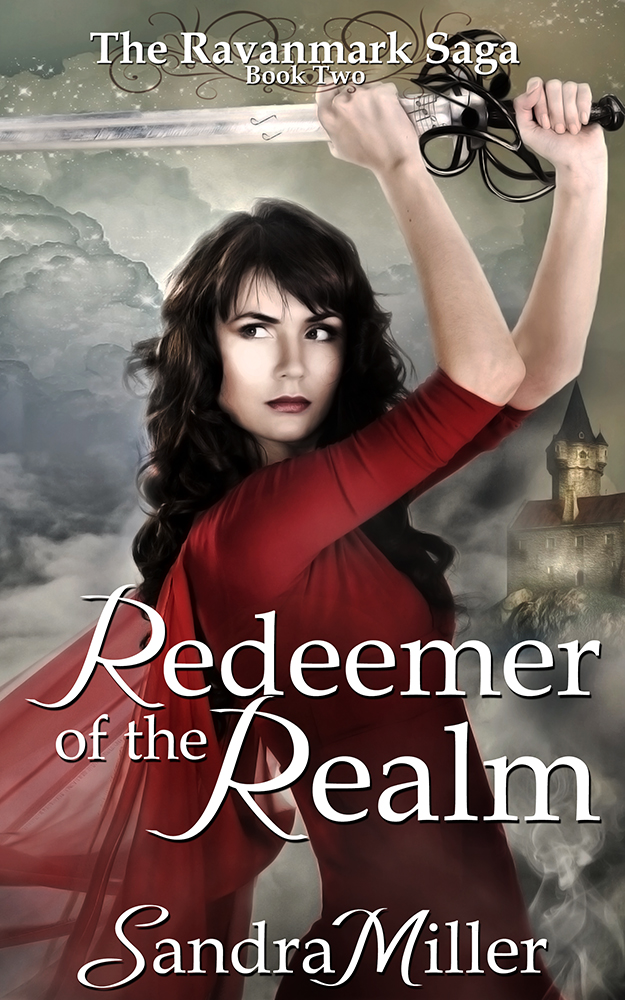
I’ve been thinking about something recently.  I’ve been thinking about some of the action in Redeemer of the Realm, my current work in progress.
Redeemer is a fantasy work.  Early on, there is a scene where a sword-wielding assassin breaks into our hero’s room.  Our hero, who is just becoming proficient with a blade, manages to defend well enough to stay alive, but sustains a pretty nasty wound in the process.

Later on, our hero gets mouthy with somebody bigger and meaner and mentally unstable, and gets pretty soundly beaten.  Very soundly beaten.

These scenes sound pretty standard, pretty much like anything you might read in any other fantasy novel.  So why are they being singled out?

Because in Redeemer of the Realm, our hero is female.  Now consider, this is fantasy–by definition the people in the story are bound by different societal and cultural conventions than our own.

But the readers–the readers are still bound pretty firmly by our societal and cultural conventions.  And in our conventions, violence toward women is A Very Bad Thing.

I agree with that, by the way.  I’m not arguing against that.

What I’m doing is raising an interesting dilemma brought up by a couple of views we hold in our society.  They don’t seem to directly contradict each other, but these couple of scenes in Redeemer–and some of the action in Concerto, especially, because it’s set here and now–show that there is at least one way in which holding both beliefs simultaneously can cause some reader discomfort.

  1. Women should be treated as equals to men
  2. Violence against women is bad

In the context of a story, these views do contradict.  When you read a story, you expect the hero to have a goal.  You expect him to meet strong opposition.  You expect him to fight hard, and not always win.  Things are never easy for the hero, and if for a short time they seem easy, it’s only because they are about to take a turn for the hellish.

Heroes fight hard.  Heroes get knocked down, and get back up again.  As many times as it takes.

But…when your hero is a female, what then?  I’ve seen in some writers a tendency to take it easier on their heroines than their heroes–the writers I’ve noticed doing that tend to be men, although that may be because I read a lot of male writers.  (For the record, I am female, which may be why I am giving the question thought.  I’m not sure of my own bias here.)

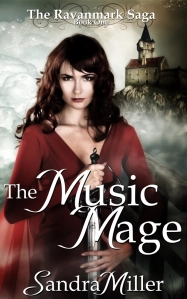
I thought about all of this when I first started The Music Mage (the book before Redeemer) and when I first started Concerto.  I don’t think it’s fair to make things easier on my heroines just because they are female.

My heroines fight hard.  My heroines get knocked down, and get back up again.  As many times as it takes.  They aren’t super-human, and they are often at a disadvantage against men who are bigger and stronger than they are, and many of their fights are not physical.  But they work hard for their goals, just as hard as the heroes.

I don’t claim to offer any answers here–just raising an interesting question.  What about you?  How do you treat heroes vs heroines in your writing?  How do you prefer them treated in your reading?

Migraines & Computers

Anybody else out there suffer migraines?  Anybody?

Of course, I know I’m not the only one with migraines.  I tell you though, a bad one can certainly make you feel like you are all alone.

This weekend has been a migraine weekend for me.  Yesterday was the worst, so I used my favorite treatment–a really hot shower followed by an ice pack–and retreated to bed.  Not much going on yesterday, no blog, no writing.

This morning was still pretty bad.  But by this afternoon it had subsided to a dull roar, and I was ready to try some writing, at least to get some notes down about where my next scene was headed.

The problem?  Looking at a computer screen turned the dull roar into screaming, blistering, eyeball-roasting pain.  Since I’ve been doing all of my writing lately on my IdeaPad, this was not so cool.

I decided to go back to longhand, and make my notes the old-fashioned way.  The only problem with this idea is that I have carpal tunnel syndrome, and arthritis in my fingers.  So gripping a pen is not really cool–I can do it for short tasks, like writing a check, but for something longer, like real writing?  Not happening.

Fortunately I have grappled with this particular problem before.  So I could just reach into my nightstand drawer for my two favorite remedies for this problem:

Evo Pen
I have to admit, it was a close call between this and the PenAgain.  Sometimes I switch between them depending on my mood 🙂  I do seem to reach for this one more often, though, and have recently ordered three more so that I can keep them everywhere.  Next on my list is the chrome-plated version, I’ll let you know how that one works out.

All of the ergonomic pens that I prefer completely change your approach to holding a pen.  This one you can cup in the palm of your hand, with your index finger over the long top side of the pen.  It is lightweight and writes smoothly, and so far the ink cartridges seem to last longer than I had expected.

For writing pages at a time, I have not found a pen to beat this one.  My school-age kids are constantly trying to steal it from me, so it isn’t just old folks like me who appreciate it.  🙂


and

PenAgain
This is my close-second favorite pen.  I have this original 3 pack, the ErgoSof, and the ErgoSleek.  The ErgoSof is very much similar to the original, I don’t notice enough difference between them to be worth comment.  The ErgoSleek has the look and the feel of a very nice pen–nice heavy feel to it, nice operation.  It does take different refills than the other two varieties.

These three packs are good for stashing all over the house wherever you might need to reach for a pen.  You slip your index finger into the curve at the top of the pen.  When I bought these pens I was having a particularly hard time with joint pain in my thumb, and this pen took care of that until I found the Evo-Pen.

The clip on the pen is not really useful as a clip–it’s too small and fragile to actually clip it to anything.  I just added a pencil pouch to my manuscript binder and carry the pens in there.  When my kids can’t steal my Evo-Pen, they will steal these.

I have lots of different ergonomic pens, but these are the two I keep coming back to.  You can check out the others I have reviewed on my website.

Writing and Music

From September 2010:

I remember, years ago, reading a quote from Louis L’Amour, my favorite writer all through high school.

”I could sit in the middle of Sunset Boulevard and write with my typewriter on my knees.  Temperamental I am not.”

At the time, in high school, I agreed wholeheartedly.  Surroundings–comfort, noise, distractions–what did they matter?  I could focus entirely on my typewriter, my pen, or later, my computer, and it really didn’t matter what went on around me.  Back then, I wrote with all kinds of music playing; it just didn’t bother me.

Enter marriage, kids, the internet, and aging–in my late twenties I found if I wanted to write, surroundings suddenly mattered.  TV and music, both had to be off for me to be productive.  My brain became too easily distracted, and if I tried to write one thing while hearing another, what actually tended to come out was a mangled-up mish-mash of the two.

So now, my regular routine is writing in silence, with a fan to cover up the noise of the rest of the house.  Until the other night, when I had to write a difficult scene, and I was having a hard time of it.  It was a scene where something bad happens to my main character, at the hands of someone who is supposed to be a friend.  It had to be compelling, I had to get in that scene.  And I didn’t want to.

And that’s when I discovered the value of writing with music, again, as though I had never realized it before.  My iPod, which was shuffling through a classical playlist, hit a movie soundtrack (why are they in my classical playlist?  Don’t ask 🙂   )  I don’t even remember specifically which soundtrack it was, it may have been Lord of the Rings, or it may have been Spiderman (LOVE Danny Elfman’s work), but either way it was a dark dramatic track where scary things were clearly happening onscreen.

And I found I could write my scene.  I was pushed to write my scene, and the tempo of the escalating music pushed me to write even faster, with more urgency.  My scene fed off the music.

So–moral of the story, I’ve rediscovered a tool I had discarded years ago.  I can decide the mood of the scene I’m working on, put on some non-distracting music that matches, and everything goes easier.

Non-distracting is the key.  I tend to work with classical music for just that reason; but there are certain pieces I know to keep off the playlist, even so.  The Mendelssohn Violin Concerto, for instance–I can’t hear it without getting instantly sucked in and forgetting whatever I was working on.

So why am I bringing this post from the old blog now?  Because I just had a reminder last night, again, how important this little trick can be.  Another tricky couple of scenes–another couple of appropriate movie soundtrack and classical concerto titles picked–another couple of difficult scenes down 🙂

It sounds simple, and it is, but it’s really useful, too.

A Couple of Writing Exercises

On my website, I have a page of writing exercises.  I originally designed them for use in character development, but they have also proven useful for writer’s block.

Today I’d like to highlight a couple of my favorites.  Any of them can be useful, but these two reliably provide an interesting writing experience, and good insights when it’s all done.

  • Your protagonist and antagonist are each required to write a letter of introduction to your reader, describing themselves, their goals and motivations, and you.
    (This exercise gives you valuable insight into the way your characters think about and describe themselves)
  • Your protagonist and antagonist each write a letter to a friend or family member (or you!) about the other.
    (This exercise helps you gain insight into how your characters view their opposition)

Rules of Magic Part II–Book Recommendation #2

If you found the discussion of magic below interesting, know that I have just barely scratched the surface.  If you’re interested in further, deeper discussion of magic systems in fantasy, and how to make them believable, I have a couple further resources for you to check out.

Holly Lisle has been my go-to source for everything writing related for years.  This article is one of the first things of hers I read, and it really opened my eyes to how complex a topic magic can be, and how much more thought I needed to give it.

Fantasy Is Not For Sissies–Real Rules for Real Worlds

Around the same time, I bought my copy of Orson Scott Card’s How to Write Science Fiction & Fantasy. Although magic is only a small part of what Card teaches in this book, it stood all my previous thoughts about magic on their head.  It taught me an entirely new way of thinking about what magic is and how it relates to the world you are building.  For me, it took the thought process that began when I read Holly’s article to the next level.

And you could do worse than to read the rest of the book, too.  It’s one of a handful of writing books that I have kept around for years after I first read them, and I still periodically pull it out and read it again.  I find something new to think about every time I read it.

Rules of Magic

Today I’d like to share with you a post I first wrote back in June of 2005.  Somewhere I have a full-fledged article I wrote that goes into this, if I can find that and it isn’t too repetitive with what’s already here, that may be worth posting too.

My first novel was a thriller/suspense.  Kind of strange, really, because I do most of my writing in the fantasy genre.  There are a few small paranormal elements in Concerto, but it isn’t fantasy the way Crystal Cave is, for sure.  Even Enemy in the Mirror, which is marketed as sci-fi, has a definite fantasy slant to it.  After the years working on The Music Mage, and now Redeemer of the Realm, I have spent a lot of time in fantasy.

So I’ve done a lot of thinking about magic, and it’s place in my works.  My views on magic are heavily influenced by Holly Lisle and Orson Scott Card, and by the mess I saw in my own writing before I defined certain things.  I have specific resources I can point to for anyone who’d like a more in-depth discussion of magic–that will be a post for another day.

For now, from June 2005:

We’ve talked before about the extra work that goes along with writing fantasy; the world-building and such that is in addition to the regular plotwork and so forth that any writer has to do to write in any genre.  One of those things that a fantasy writer must deal with is the rules of magic.

Almost all fantasy novels include magic of some type.  Whether it’s wizards wielding fireballs or commoners wielding enchanted weapons, fantasy worlds are rife with magic.  It’s part of the appeal of fantasy.  For many fantasy writers, it’s also part of their downfall, at first.

Because the fantasy writer gets to make all the rules, it’s easy to succumb to the temptation to start out with no rules.  Especially with magic.  Why should I have to make rules about magic?  It’s MAGIC, it’s supposed to be able to do ANYTHING.  That’s why it’s MAGICAL.

I disagree.  The magic in your fantasy world should always have limits and costs.  Often, for every magic you create you will want to create a counter, whether it is well-known to your characters or not.  But at the very least, limits and cost.

Why?  Well, think about it this way.  If your magic is all-powerful, capable of anything, and costs nothing to use, the first person to invoke it wins.  End of story.

“And Galdad the Great snapped his fingers and Hured the Evil, menace to all the free peoples of the worlds, was reduced to a small pile of smoldering ash.  Everyone cheered and they all lived happily every after.”

Ick.  If there are no limits and no cost, there is also no story.  Story is about conflict and struggle, and if your magic can do everything for you and there’s no reason not to use it, then there is not conflict, and no struggle.  No story.

So.  Limits.  Limits define your magic.  What can it do?  Perhaps more importantly, what can it NOT do?  If you want your characters to be able to summon spirits but not raise the dead, limit them.  If characters should be able to see the future but not scry what is happening right now somewhere else, you need a limit.  Maybe your characters really do have all-powerful magic, but they have to be touching their target.  Ach.  Limits allow your struggle to exist, by making sure your characters can’t just cast a spell and make everything wonderful again.

Cost.  A well-defined system of magic should have a price that is extracted for using that magic.  Unless you really do want your characters to be able to use magic all the time.  Sometimes, if your limits are strictly defined you can get away without a cost.  If a magician must use a wand or a staff to cast magic, then cost becomes perhaps less of an issue–if you don’t want him using magic you can separate him from his implements.

Usually, though, you will have a cost associated with magic.  Maybe it saps the user’s strength, maybe it takes hours, days, or even years off of a person’s life, depending on the magnitude of the spell.  Maybe sacrifices must be made.  Perhaps difficult to locate, expensive ingredients must be combined into a potion that is used when the magic is cast.  Cost allows your basic conflict to exist, by ensuring your characters don’t use magic to solve every problem they encounter.

There are many, many other things you must consider when designing complex, believable magic systems, but the two primary things are limits and cost.  Start with those and you will be well-equipped to pursue the others.

To Plot or Not to Plot, Part II

Back in June of 2005, I wrote a blog post called To Plot or Not to Plot (it’s reposted below for your convenience).  Almost six years ago, lots of discussions I was involved in revolved around different methods of writing.
And today?  Well, I can report that today these same types of discussions continue.  We have two sides here–call them the “seat-of-your-pants” and the “safety nets”.  Team Pants believes writing by the seat of your pants is the most fun, visceral, exciting way to write–no real upfront plotting, you just have an idea and sit down and run with it.

Team Safety Net believes in doing your homework up front–there are just some things you’re going to have to know to get a whole story on paper.  So do those things first, then sit down and have at it.

Almost six years ago I reported that I have written both ways.  At that time though, I was finding myself more on Team Safety Net than Team Pants.

And today?  Well, today I can report that I am pretty firmly entrenched in Team Safety Net.  I do see the value of just sitting down and writing for specific uses, like exercises.  But for “real” writing, no question.  Team Safety Net, hands down.

Why?

There are a couple reasons.  First, if you’re anything like me, a whole lot of the things you just sat down and started writing didn’t turn out.  Mostly they are abandoned.  There just isn’t enough there to carry that story to the end.  That’s the kind of problem that turns up a lot earlier if you’re doing your homework at the outset.

Second, it is my firm belief that writing something solid takes less time if you do the back-work upfront.  You may remember that The Music Mage started out with a vague concept and seat-of-the-pants writing.  And it certainly worked out.  But it took a long time to get there.  Revising Music Mage was interesting–I had a book where the first half was written seat-of-the-pants, and the second half was written with a more complete understanding of the story I was telling, and why I was telling it.

That first half was a lot harder to revise.  It included a lot of material that wasn’t relevant to the plot–because, at the point that I wrote it, I had no idea what the plot really was.  It included material that did matter, but was written from the point of view of non-viewpoint characters–because, at the point that I wrote it, I did not know whose viewpoints would matter.  The second half, by comparison, was a breeze.

Okay, but couldn’t that be because a book always starts to fall together better in the second half?  Maybe the difference didn’t have anything to do with how much background material was available when I wrote it.

I don’t think that’s the case.  I’m not ready to start revision on Redeemer of the Realm yet–I’m still working on the first draft–but I can already see this book does not have that problem.  Before I ever wrote a word on this book I knew where it was headed and why, and it shows.

The next question is always: “But doesn’t that take all the fun out of writing?”

Well, no.  See, here’s the thing.  What I have when I start out writing is a general, high-view road map.  I know I am going to go from Point A to Point B, and I have a general idea what the road is going to look like along the way.  I have a few specific scenes in mind that I know I want to put in there, and I have a few specific scenes in mind that I know must happen to get me from here to there.  But a lot of material is only discovered as you are writing.  You never plan every little thing that will happen in a book, and you’ll find out things–sometimes big things–as you are actually writing.  That never changes.  The difference in doing it this way is that all of that discovery and exploration happens in an established framework.  And that framework helps you to know which detours are worth exploring, and which ones are headed in directions you don’t want to go.